
Climate-foolish Forestry

Climate-smart forestry rests on the twin pillars of adaptation and mitigation. I like to think of them as co-strategies or coupled goals. Adaptation includes management objectives that respond to the impacts of climate change that are already underway, and those expected to occur in the future. Mitigation includes management objectives that reduce atmospheric greenhouse gasses, either through avoided emissions—a fancy term for keeping forests standing—or through removal and sequestration, as carbon dioxide is converted into wood and other biological products. If we can agree that forestry is the art and science of creating, managing, and protecting forests for human use and environmental benefits, then all forestry ought to be climate-smart.
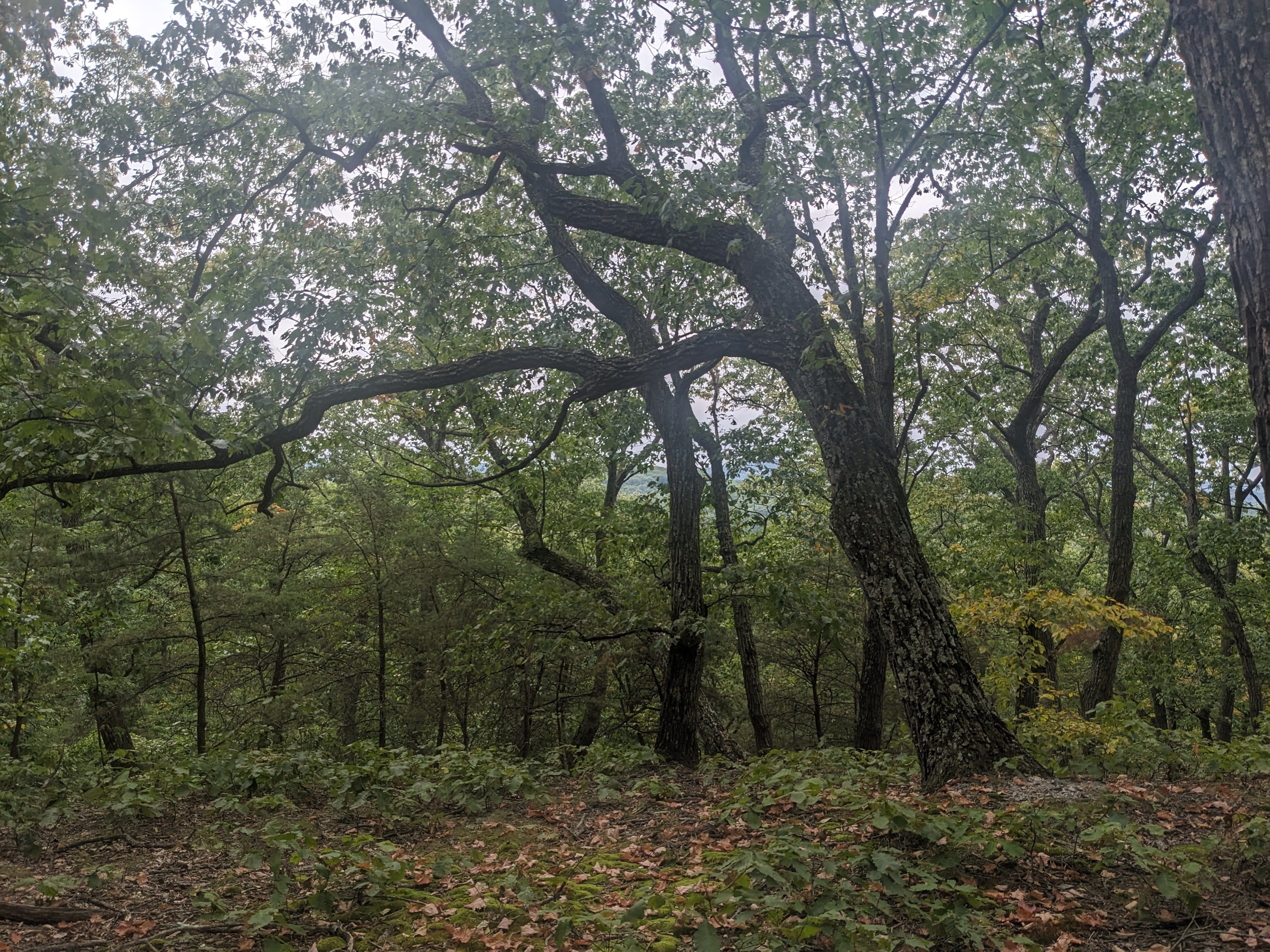
I’m sometimes asked to give examples of specific climate-smart forestry practices. I can draw on my experiences with Appalachian oak forests and give examples. However, these practices would be specific to the region and land use history where I work. The majority of forests I manage are post-agricultural in origin, and developed in an era of fire suppression. Climate-smart forestry in my region then often involves restoration practices that are designed to increase the adaptive capacity of the forest, and manage for increased carbon sequestration in the largest trees and in other parts of the ecosystem. In practice, this means reducing the density of trees that have benefited from fire suppression, favoring fire-adapted species. In some places, it can involve controlled burns. This particular approach, while climate-smart in southern Ohio, would not be climate-smart in the northern boreal forests, evergreen tropical forests, or the ponderosa pine forests that characterize the western United States. Managing for adaptation and mitigation are different in different places. There are hundreds of climate-smart forestry practices, maybe thousands. But I do not think that developing a master menu of practices, mostly untested and unproven, and applying a small subset to a particular place is the smartest approach. There is a shortcut.
Years ago, I was enrolled in a graduate seminar on sustainable forests. In our first meeting, we did not talk about sustainable forests at all. Instead, we focused on its opposite, unsustainability. It was easy to come up with forest management practices that were unsustainable. In other words, we knew what failure looked like. As we discovered over the course of the semester, it was a lot harder to identify successful sustainable forest practices. Sustainable by whose criteria? For how long? And what role did catastrophic disturbance like fires or hurricanes play in judging sustainable practices? To this day, I’ve been a fan of inversion—looking at problems backwards. When dealing with complex challenges, it is sometimes better to identify what we want to avoid instead of what we want to achieve. This leads us to climate-foolish forestry.
Climate-foolish forestry simply needs to avoid practices that facilitate climate adaptation or mitigation. How would I manage to avoid climate adaptation? I would ignore the studies which list species by climate vulnerability in my region. I would pursue strategies that made my forest more vulnerable to climate disruption. I could emphasize single-species stands, and try to manage for a just single age class in the forest. I would refuse to consider assisted migration as a strategy. Lastly, I would be rigid and inflexible with my management plan, and make sure my plan had a single management objective. I could easily manage forests to minimize climate mitigation. My main strategy would be to let nature take its course. Let invasive species establish and spread. Let destructive pests and pathogens do their thing. I would not manage woody vines at all, even though they can reduce carbon capture. I would not worry about reforestation following a timber harvest. Most importantly, I would not pay any attention to how much carbon my forest captured each year—I would instead solely focus on board feet of lumber and tons of pulpwood.
There are some counter-intuitive ways to practice climate-foolish forestry as well. You could manage for mitigation with the goal of maximizing carbon sequestration throughout the forest. While this might seem to be a reasonable goal at first glance, do you want to maximize woody biomass in fire-dependent forest types? Do you want to replace a diverse, mixed-species forest with a plantation of a single rapidly-growing species, making the stand more vulnerable to a range of disturbances? Do you want to adopt a singular focus on carbon capture, and plant trees in rare habitat types, like glades, barrens, and grasslands, just because above-ground biomass is easy to measure and model? Do you want to accelerate logging of older forests, since conventional wisdom (but not actual research) holds that younger forests always sequester more carbon than older forests?
If you want to get on board with climate-smart forestry but find yourself unsure about what that entails, relax. If you are a professional forester, you already have the tools you need. You just need to be asking the right question. There are lots of ways to practice climate-smart forestry. Just ask yourself “is this practice climate foolish?” If so, you know what to avoid.